In a world where everything moves faster—where keys vanish into the abyss of a cluttered bag, wallets slip from pockets unnoticed, and luggage disappears into the anonymous sea of airport carousels—the true value of an object is often measured not by its price tag, but by the peace of mind it brings when it’s found. Enter Apple AirTag: not merely a tracker, but a silent sentinel, a digital compass embedded in your everyday life. It doesn’t shout for attention; it whispers certainty. And in doing so, it redefines what it means to be truly connected—not just to devices, but to the tangible things that anchor us to our routines, our journeys, and our sense of order.
At its core, AirTag is engineered with minimalist elegance and profound intelligence. Its circular form—just 31.9 mm in diameter and a mere 8.0 mm thick—fits effortlessly into the palm of your hand or slips discreetly into a keyring, backpack strap, or pet collar. Crafted from precision-machined stainless steel with a polished finish, it exudes quiet sophistication.
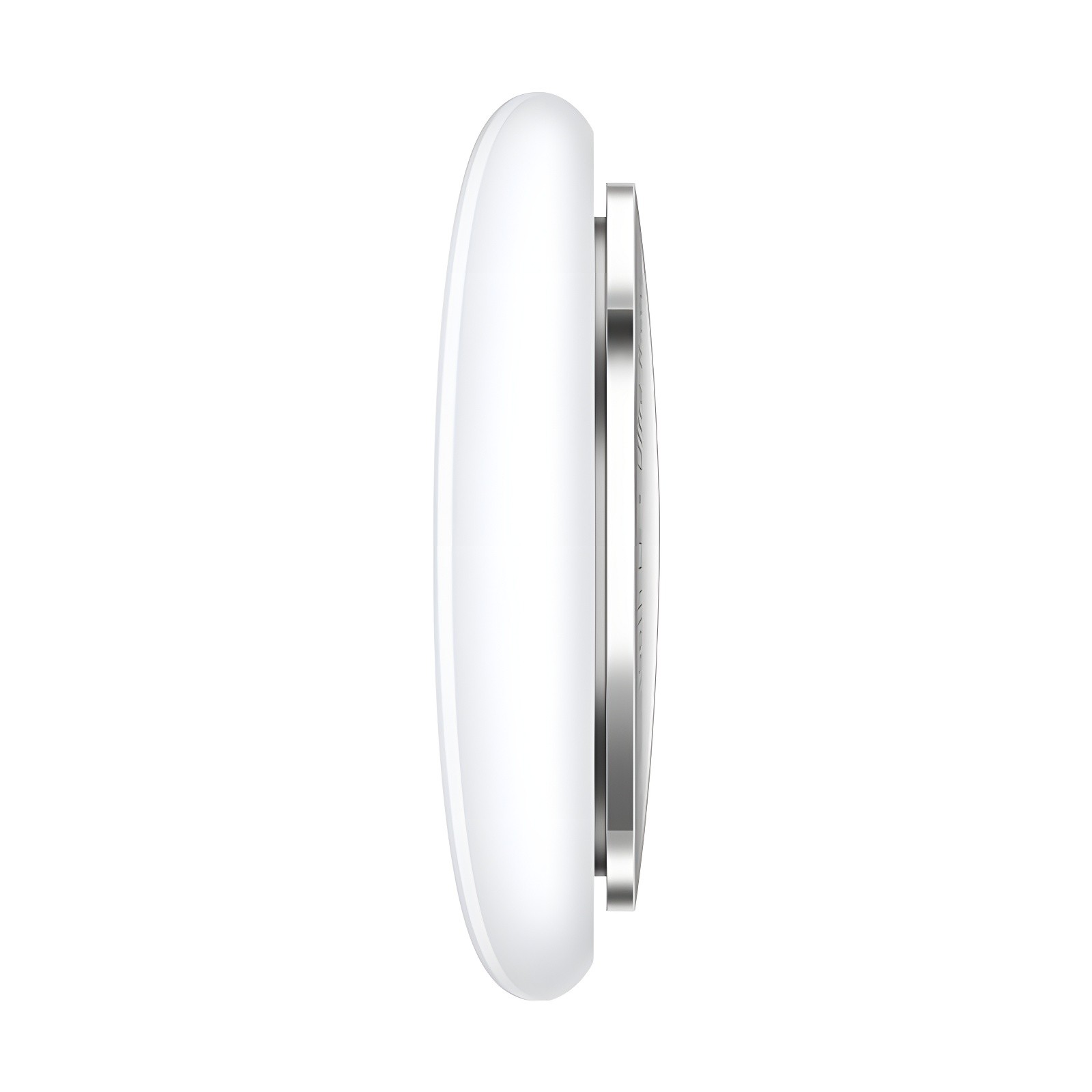
The front features the iconic Apple logo, subtly etched and laser-etched for durability, while the reverse side houses a custom-designed ultra-wideband (UWB) chip, the heart of its spatial awareness magic. This isn’t just hardware—it’s a symphony of silicon, antenna design, and cryptographic security working in unison to deliver a level of precision no other consumer tracker can match.
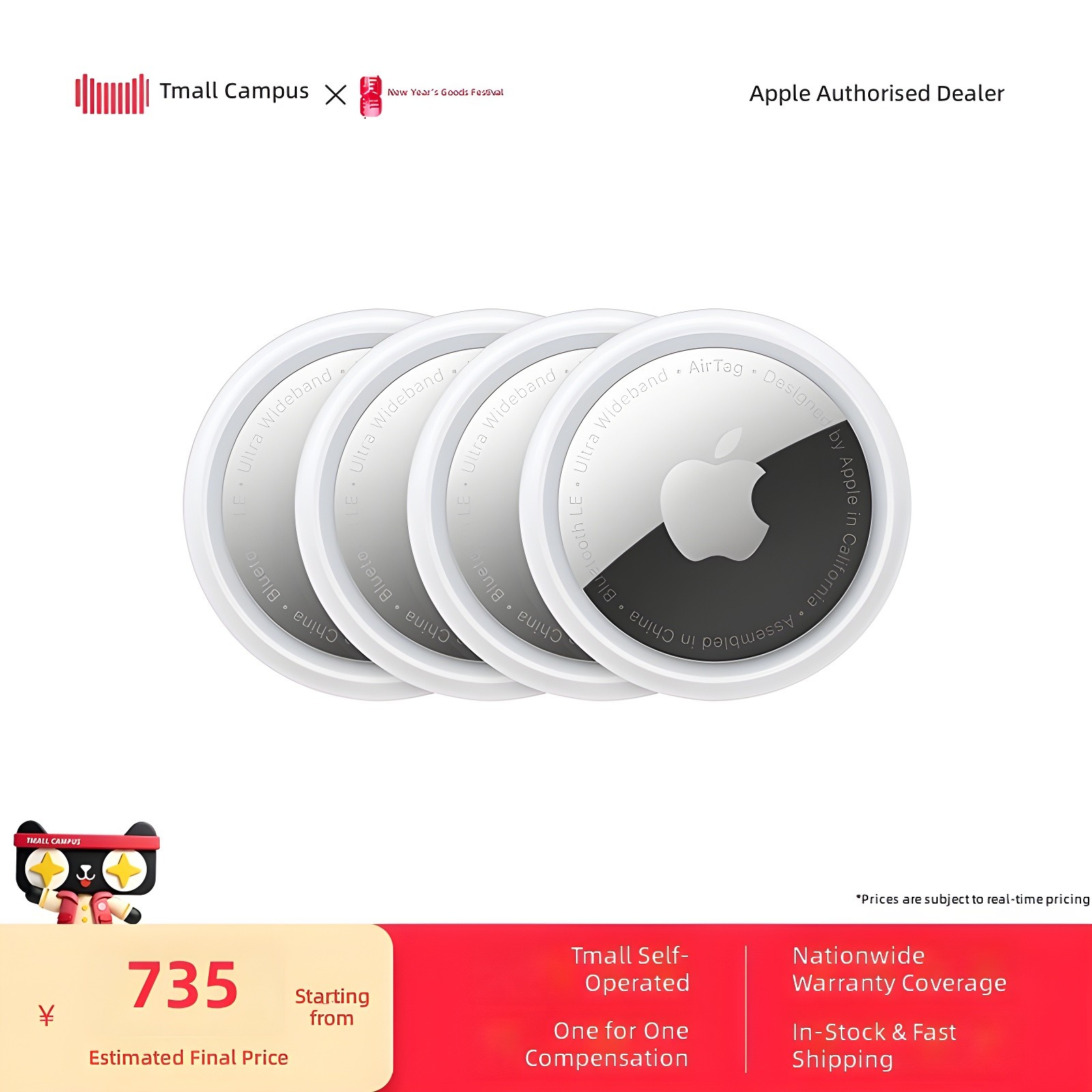
What sets AirTag apart is not what it does—but how it does it. Traditional trackers rely on GPS or Bluetooth alone, leaving you with vague proximity alerts or frustratingly imprecise location dots on a map. AirTag leverages Apple’s proprietary Ultra Wideband technology—a high-frequency radio wave system operating in the 6–8 GHz band—to achieve centimeter-level accuracy. When you’re within range of your iPhone 11 or later (or iPad Pro, iPad Air, or iPad mini with UWB), the Find My app doesn’t just tell you “it’s nearby.” It guides you with an intuitive directional arrow and distance indicator, showing exactly which way to turn and how far to walk—like having a trusted friend pointing silently toward your lost keys behind the sofa. This isn’t approximation; it’s navigation with surgical precision.
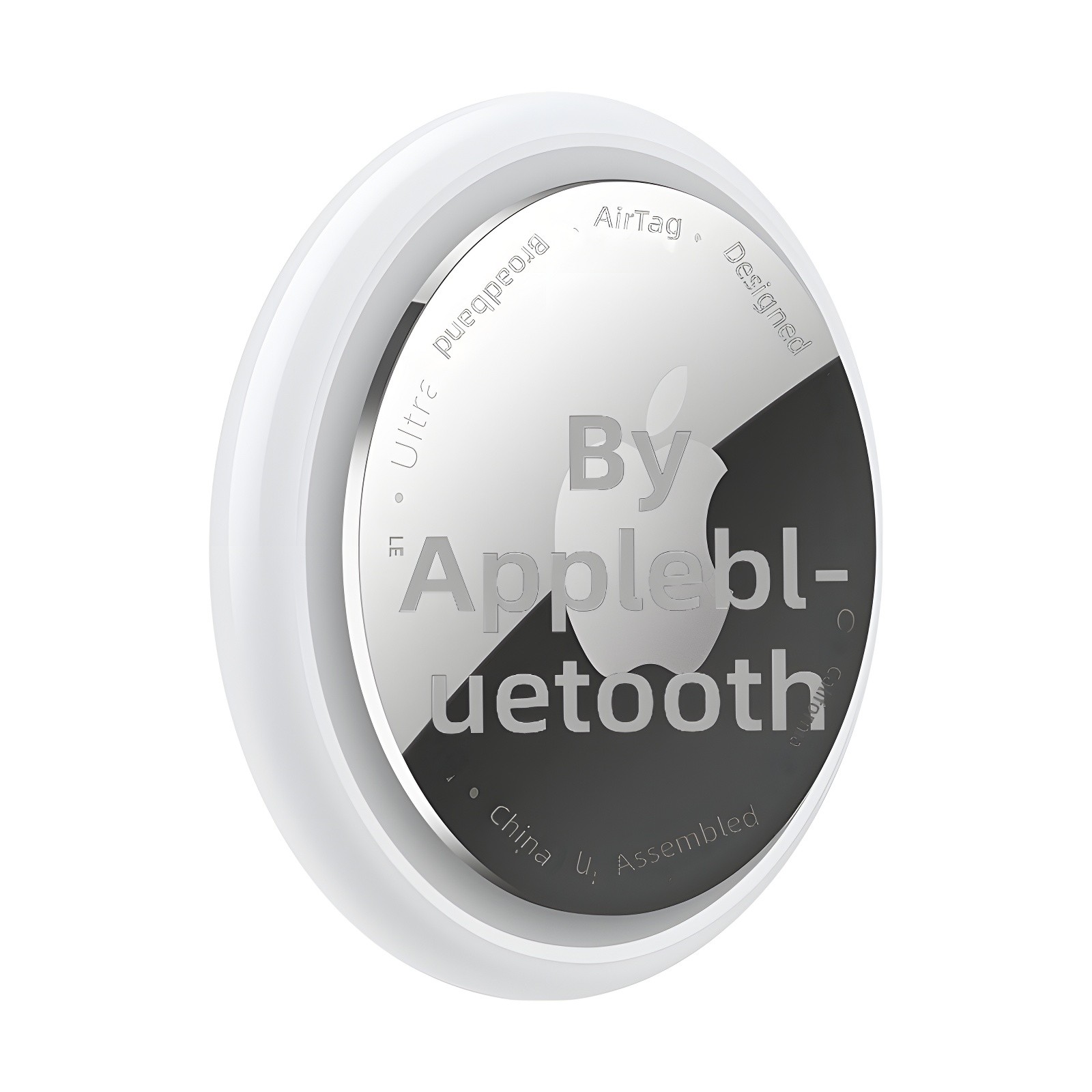
But AirTag’s brilliance extends far beyond your immediate vicinity. Its integration with the global Find My network transforms every compatible Apple device—hundreds of millions worldwide—into a secure, anonymized relay. If your AirTag goes out of Bluetooth range, it can still be located through encrypted, anonymous signals passed from nearby iPhones, iPads, or Macs—all without revealing your identity, the AirTag’s owner, or the device’s location. This decentralized mesh network operates entirely on privacy-first principles: all communication is end-to-end encrypted, and no location data ever touches Apple’s servers. Even if someone else finds your AirTag, they cannot access your information—only a generic, anonymized message (if you’ve chosen to set one) appears on their device screen. Privacy isn’t a feature; it’s the foundation.
The user experience is designed for effortless seamlessness. Setup takes seconds: simply bring the AirTag near your iPhone, tap to connect, and assign it to a personal item—“Keys,” “Backpack,” “Bicycle”—with a tap. From there, it works invisibly in the background. Need to locate something? Open the Find My app, select the item, and watch as the interface transitions from map view to augmented reality mode (on UWB-enabled devices), overlaying real-time directional cues onto your camera feed. You literally see where to go. And if your AirTag is misplaced in a public space, activating Lost Mode ensures that if anyone scans it with an NFC-capable smartphone—even an Android device—they’ll see your custom message and contact details (if provided), all while preserving your anonymity.
AirTag’s acoustic intelligence adds another layer of utility. A gentle tap on the back triggers a soft chime from its built-in speaker—ideal for locating items buried in a drawer or under a pile of laundry. Better yet, you can ask Siri, “Hey Siri, where are my keys?” and your iPhone will instantly guide you to the AirTag attached to them. For those who prefer voice commands on the go, saying “Hey Siri, find my backpack” initiates the same precise directional guidance—no app opening required. This hands-free interaction makes AirTag feel less like a gadget and more like an extension of your own intuition.

Durability meets discretion. AirTag is rated IP67 for dust and water resistance—meaning it can survive immersion in up to 1 meter of water for 30 minutes and withstand dust ingress that would cripple lesser electronics. Whether it’s caught in a sudden downpour, dropped in a puddle, or tucked into a dusty gym bag, it remains operational. Its replaceable CR2032 coin cell battery delivers over a year of continuous use under typical conditions—no charging cables, no daily rituals, just reliable performance. And because it’s designed for longevity, Apple has engineered it to minimize environmental impact: the stainless steel casing is fully recyclable, and the internal components are optimized for minimal material waste.
Customization is where AirTag transforms from utility into identity. While the standard model offers understated elegance, Apple’s ecosystem of accessories—ranging from leather loops and silicone cases to premium engraved metal holders—allows you to express personality without compromising function. Choose vibrant hues to distinguish multiple tags, or opt for minimalist tones that blend seamlessly with your lifestyle. Each accessory is magnetically attached, ensuring secure fastening while allowing for quick swaps. This isn’t just about tracking; it’s about curating your relationship with your belongings—turning mundane objects into personalized extensions of self.

The technological sophistication beneath AirTag’s simplicity is staggering. Its custom Apple U1 chip enables spatial awareness that interprets signal phase, angle of arrival, and time-of-flight to calculate position with unprecedented fidelity. The firmware updates silently in the background, continuously refining algorithms for better accuracy and efficiency. And unlike third-party trackers that require constant app refreshes or drain your phone’s battery, AirTag operates on ultra-low-power protocols, ensuring your iPhone’s battery life remains unaffected even during prolonged searches.
Consider the scenarios where AirTag becomes indispensable:
- A parent drops off their child’s school bag at the playground—and later realizes it’s missing. With AirTag, they don’t panic; they open Find My and follow the precise path back to the bench where it was left.
- A traveler arrives at a bustling train station, only to realize their carry-on is gone. Within minutes, they locate it—still inside the station—thanks to the Find My network’s anonymous relays.
- An artist leaves their prized sketchbook in a café; hours later, a passerby finds it, taps the AirTag with their Android phone, sees the owner’s message, and returns it directly—no middlemen, no delays.
These aren’t hypotheticals. They’re daily realities for millions who have embraced AirTag as their invisible safety net. It doesn’t prevent loss—it eliminates the anxiety of uncertainty. In a culture obsessed with digital connectivity, AirTag reminds us that the most valuable connections are often physical, tangible, and deeply personal.
Moreover, AirTag represents Apple’s commitment to ethical innovation. Every aspect—from the encryption protocols to the manufacturing standards—is scrutinized for integrity. There are no hidden data harvests, no third-party tracking SDKs, no behavioral profiling. Your location history, your item associations, your lost-mode messages—all remain under your sole control. This isn’t marketing rhetoric; it’s architectural philosophy. In an era where digital trust is increasingly fragile, AirTag stands as a beacon of responsible design.
The convergence of hardware, software, and network intelligence creates a product that feels almost magical—yet is grounded in rigorous engineering. It’s not about adding features for the sake of novelty; it’s about solving a universal human problem with grace, reliability, and dignity. AirTag doesn’t demand attention; it earns trust. It doesn’t complicate your life; it simplifies it. And in doing so, it elevates the ordinary act of finding something lost into a moment of quiet triumph—a reminder that even in chaos, clarity is possible.
This is more than a tracker. It’s a promise: that the things you care about won’t disappear into the void of forgetfulness. That you’ll always know where to look. That technology, at its best, serves not to distract, but to restore balance—to help you live with confidence, intention, and calm. AirTag doesn’t just find your keys; it找回 your peace of mind. And in a world that moves too fast to pause, that’s the most valuable thing you can carry.
More Supplier Information
For detailed supplier information about this product, please visit:
https://www.ericbuy.com/product/detail/taobao/707859061335/detail.html