In a world where life moves at breakneck speed, losing something important isn’t just inconvenient—it’s emotionally jarring. Keys vanish between couch cushions. Wallets slip from pockets in crowded transit hubs. Laptops disappear during a hurried coffee shop exit. The modern individual carries not just physical items, but fragments of identity, responsibility, and peace of mind—each one tethered to a single point of failure: misplacement. Enter Apple AirTag—a deceptively simple disc that redefines personal item tracking through seamless integration, intelligent design, and unparalleled privacy.
At first glance, AirTag appears minimalist: a 31-mm stainless steel disc, weighing just 11 grams, with a polished front face featuring the iconic Apple logo and a matte-finished reverse side housing the electronics. Its elegance is intentional—not merely aesthetic, but functional. The precision-machined aluminum casing offers durability without bulk, while the IP67-rated water and dust resistance ensures reliability across daily adventures, from rain-soaked commutes to dusty hiking trails. This is not a gadget designed to be noticed; it’s engineered to disappear into your routine—until you need it most.
Precision Tracking, Powered by the Apple Ecosystem
What sets AirTag apart is not its hardware alone, but how it leverages the world’s largest secure location network: the Find My network. Unlike conventional Bluetooth trackers that rely solely on proximity or require dedicated apps and paired devices, AirTag operates within a vast, encrypted mesh of over a billion Apple devices worldwide. When an AirTag goes out of range of your iPhone, iPad, or Mac, it doesn’t go silent. Instead, it anonymously broadcasts a secure Bluetooth signal. Nearby Apple devices—belonging to strangers, friends, or passersby—detect this signal, relay the anonymized location data to iCloud via end-to-end encryption, and update your Find My app in real time—without revealing the identity of the relaying device or the owner of the AirTag.
This global infrastructure transforms every iPhone user into an unwitting guardian of lost items. No subscription fees. No additional hardware. No reliance on cellular networks or GPS satellites (which drain battery and struggle indoors). AirTag uses ultra-wideband (UWB) technology—enabled by the U1 chip—for precise spatial awareness when paired with iPhone 11 or later models. Point your phone toward the AirTag, and the screen displays directional arrows and distance estimates down to centimeters, guiding you like a digital compass through drawers, under beds, or inside cluttered bags. This “Precision Finding” feature turns searching from a frustrating game of guesswork into an intuitive, almost magical experience.

Thoughtful Design, Seamless Integration
AirTag’s genius lies in its adaptability. The standard model ships with a smooth, minimalist finish—ideal for slipping into a wallet, attaching to a keyring, or tucking into a laptop sleeve. But Apple understands that personalization and utility matter. That’s why AirTag is fully compatible with a rich ecosystem of accessories—from leather loops and silicone cases to premium third-party mounts and clips. In the image, we see a sleek black leather key ring with a silver metal loop, elegantly securing an AirTag while adding tactile sophistication. The packaging itself reflects this ethos: clean, white boxes with embossed logos and subtle typography, echoing Apple’s commitment to uncluttered elegance. Each AirTag is individually sealed in a recyclable paper tray, emphasizing environmental responsibility without compromising protection.
The 4-pack configuration shown is especially strategic for modern lifestyles. One AirTag for keys. One for your backpack. One for your gym bag. One for your laptop case—or perhaps your child’s school bag, your pet’s collar, or your favorite pair of sunglasses. Redundancy isn’t excess here; it’s preparedness. With four tags, you build a comprehensive safety net across your most frequently misplaced items, ensuring no critical object slips through the cracks.
Privacy-First Architecture: Security You Can Trust
In an age of pervasive data harvesting, AirTag’s privacy framework is revolutionary. Every interaction is built on cryptographic principles that prioritize user sovereignty. Location data is never stored on the AirTag itself. The Find My network uses rotating identifiers that change frequently, preventing long-term tracking. If an AirTag is separated from its owner for an extended period, it begins emitting a sound after three days—and any nearby Apple device can detect and alert the owner if the tag is moving unexpectedly (a critical anti-stalking safeguard). Furthermore, non-Apple users can scan an AirTag with NFC-enabled smartphones to access a web page displaying only the owner’s contact information—if they’ve chosen to share it—without exposing any location history or personal data.
Apple has gone to extraordinary lengths to prevent misuse. The system includes automatic alerts if an unknown AirTag is traveling with you, and iOS provides step-by-step instructions to disable or locate the source. This isn’t just compliance with regulations—it’s ethical engineering. AirTag respects the dignity of all users: those who own it, those who find it, and those who might inadvertently carry it. It proves that convenience and integrity are not mutually exclusive.
Real-World Resilience, Engineered for Daily Life
Durability is woven into AirTag’s DNA. The stainless steel front resists scratches and fingerprints, maintaining its luster through months of use. The back features a replaceable CR2032 coin cell battery—delivering over a year of typical usage—with low-battery notifications delivered directly to your iPhone. Replacement is effortless: twist the back cover counter-clockwise, swap the battery, and snap it back. No tools. No technical expertise. Just continuity.
Indoor performance is where AirTag truly shines. Traditional GPS trackers falter inside buildings, tunnels, or dense urban canyons. AirTag, however, thrives in these environments thanks to Bluetooth LE and UWB triangulation. Whether your keys are buried in the depths of a tote bag, your passport is tucked inside a suitcase at the airport, or your bike lock is hidden behind a bush in a park, AirTag maintains connectivity where others fail. And because it integrates natively with iOS, macOS, and iPadOS, setup takes seconds: simply bring the AirTag near your iPhone, tap “Connect,” assign a name (“Mom’s Car Keys,” “Work Laptop,” “Hiking Pack”), and you’re protected.
Beyond Tracking: A New Layer of Digital Confidence
AirTag transcends utility—it cultivates confidence. It eliminates the nagging anxiety that accompanies leaving the house: Did I grab my wallet? Is my phone charger still in the office? Where did I leave my umbrella? With AirTag, you operate from a place of certainty. You know that even if something slips away, it remains findable. This psychological shift is profound. Parents gain peace of mind knowing their child’s backpack is locatable. Travelers navigate unfamiliar cities without fearing lost essentials. Professionals move between meetings, campuses, or client sites knowing their tools are accounted for.
Moreover, AirTag fosters intentionality. Because attaching a tag requires a deliberate act, users become more mindful of their belongings. The ritual of placing an AirTag on a new purchase—be it a designer handbag, a vintage camera, or a heirloom watch—transforms ownership into stewardship. It’s a small gesture that reinforces value, care, and continuity.
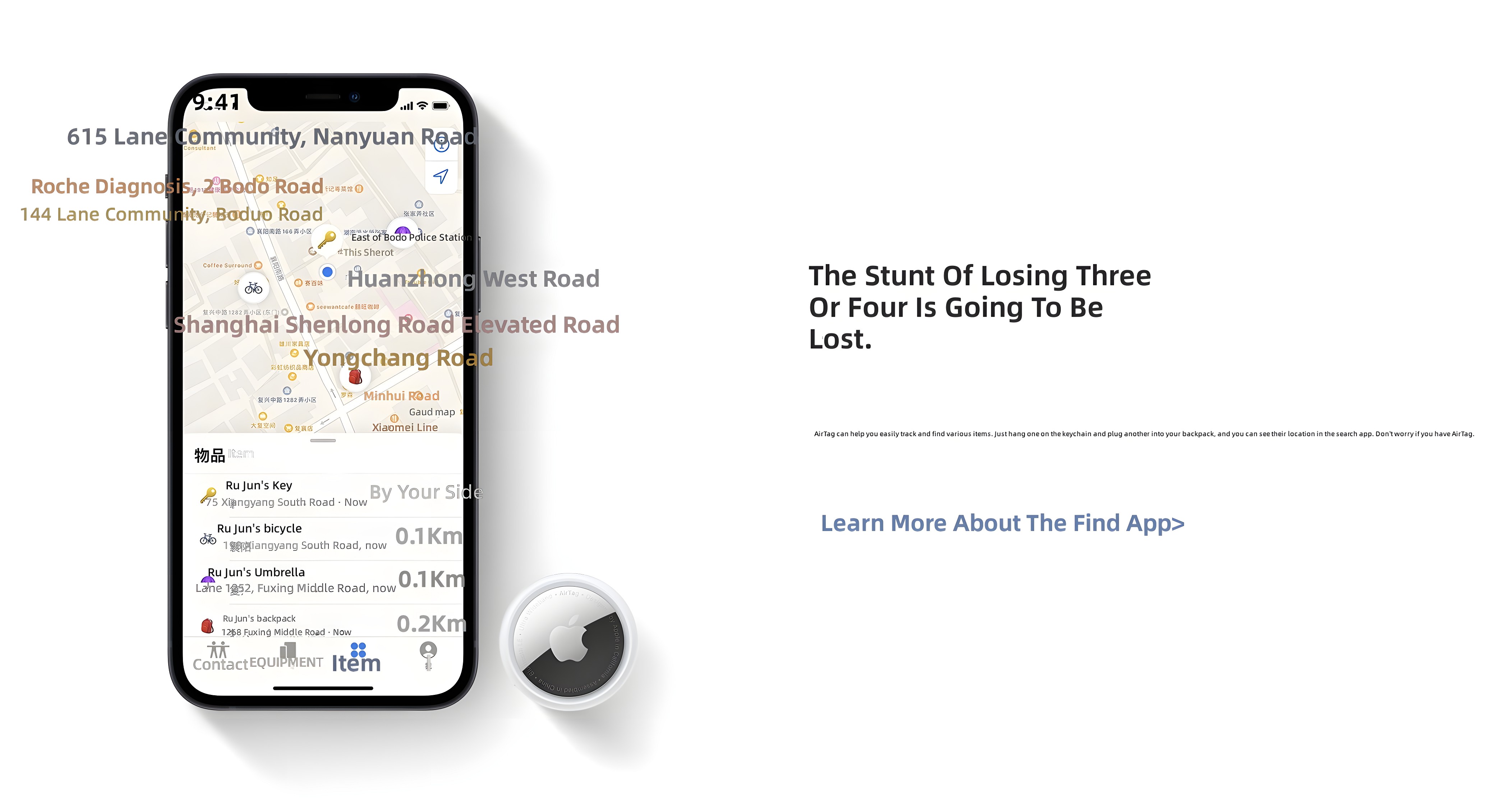
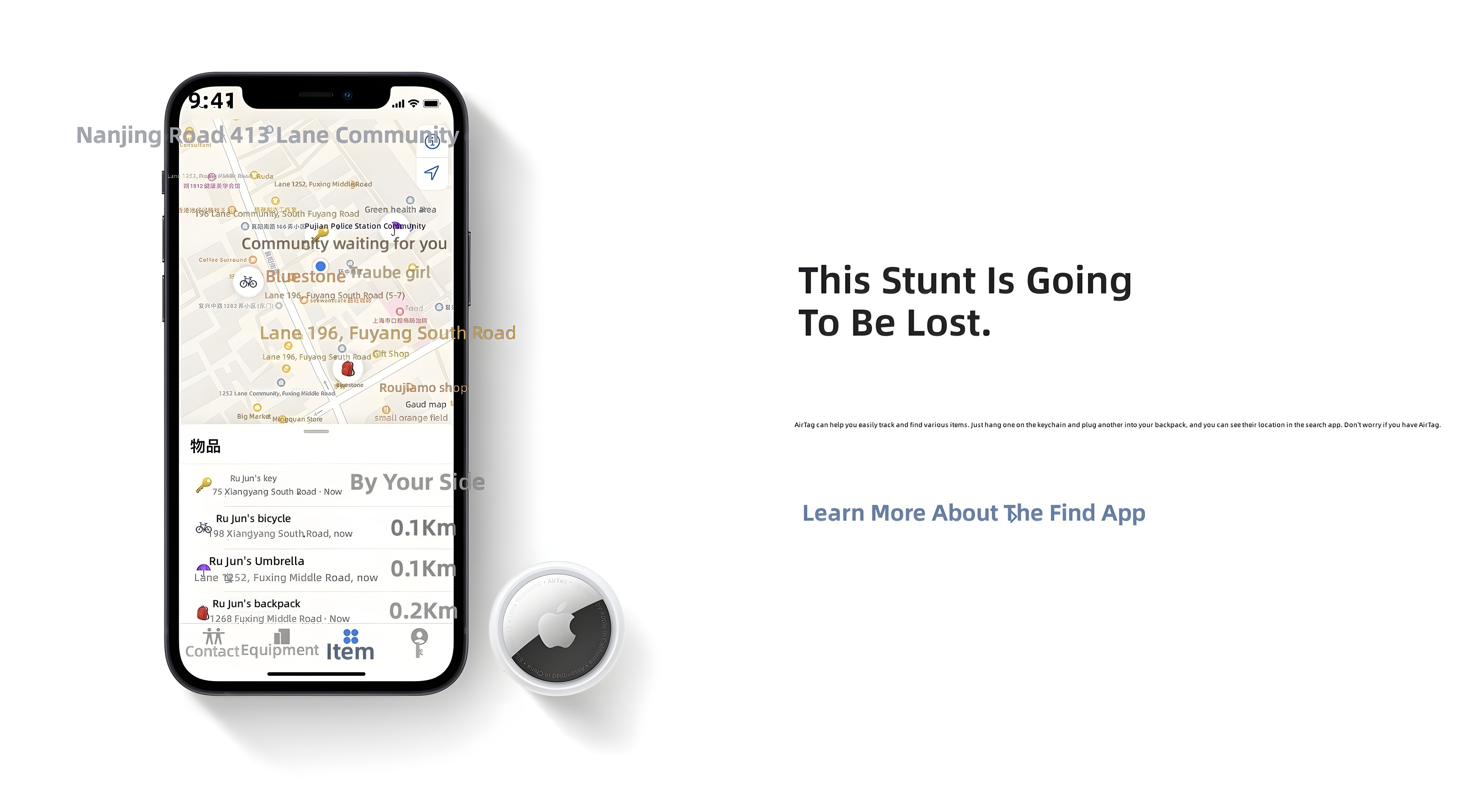
The visual narrative in the images underscores this philosophy: the smartphone screen displays the Find My interface with crisp map overlays and categorized item lists—“Keys,” “Backpack,” “Bicycle”—each marked with precise location pins. The interface is calm, uncluttered, and authoritative. There’s no panic, no frantic searching—just quiet assurance. Beside it, the AirTag rests like a silent sentinel, ready to serve when called upon.
The Future Is Already Here
AirTag represents the culmination of years of refinement in wireless technology, privacy architecture, and human-centered design. It doesn’t ask you to change your habits; it adapts to them. It doesn’t demand attention; it delivers relief. In a market saturated with noisy gadgets promising miracles, AirTag stands apart by doing one thing exceptionally well: helping you reclaim what matters—without compromise, complexity, or compromise on ethics.
Its power lies not in flashiness, but in fidelity. Not in constant connectivity, but in intelligent silence until needed. Not in isolation, but in harmony with the devices you already trust. When you attach an AirTag to your most valued possessions, you’re not just adding a tracker—you’re embedding resilience into your daily rhythm. You’re choosing a future where loss is temporary, and recovery is certain.
This is more than a product. It’s a promise—delivered in a 31-mm circle of brushed metal and quiet intelligence. A promise that in a world of chaos, some things can always be found.
More Supplier Information
For detailed supplier information about this product, please visit:
https://www.ericbuy.com/product/detail/taobao/642741877559/detail.html