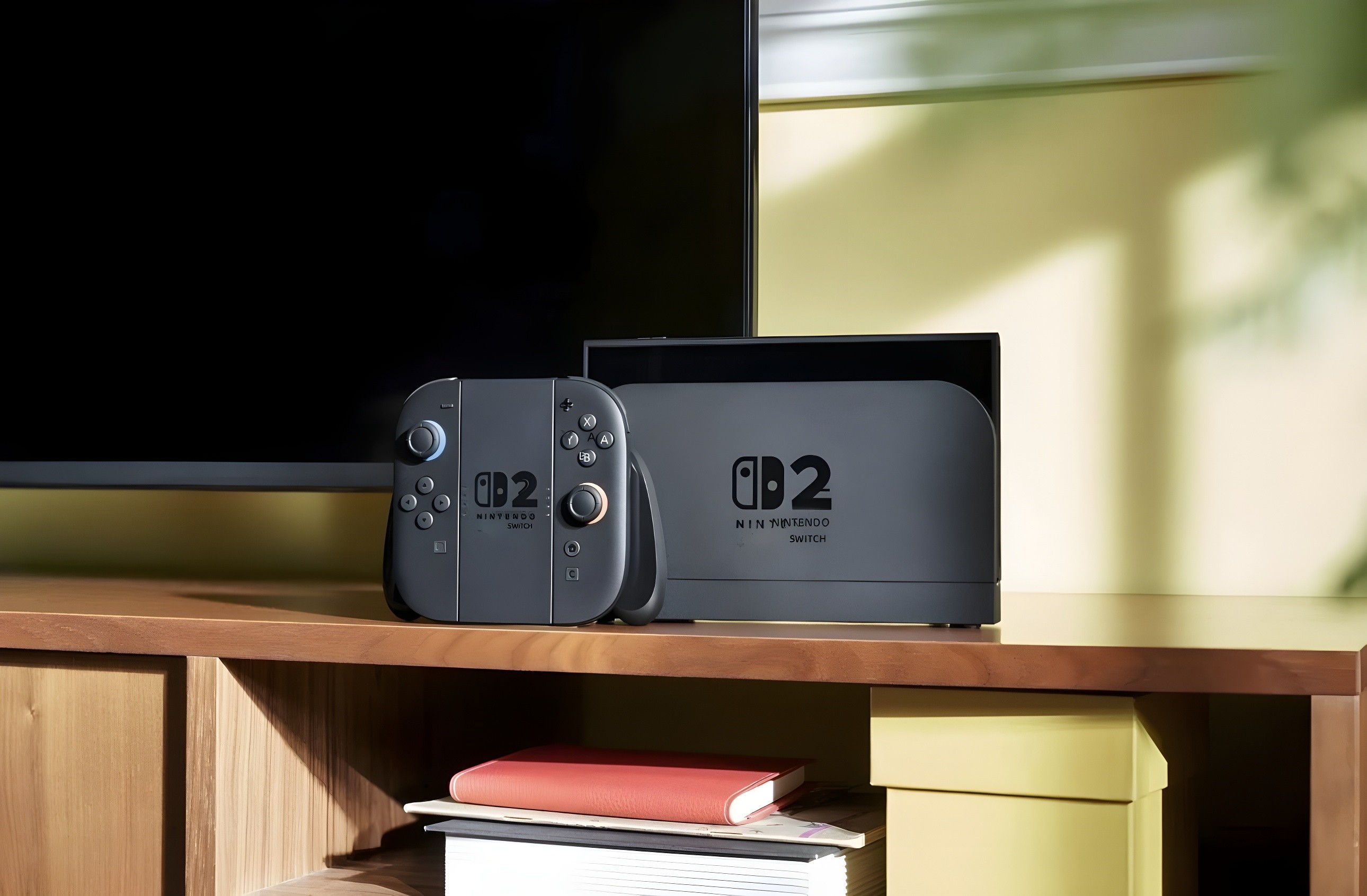
In an era where gaming transcends mere entertainment and becomes a cultural phenomenon, the Nintendo Switch 2 emerges not as a simple upgrade—but as a redefinition of what portable interactive experiences can achieve. Built upon over a decade of innovation, community trust, and relentless refinement, this second-generation console represents the pinnacle of Nintendo’s design philosophy: intuitive, inclusive, and immersive. It is not merely a device; it is a gateway to worlds unimagined, a canvas for creativity, and a shared stage for connection across generations.

A Quantum Leap in Hardware Architecture
At its core, the Nintendo Switch 2 is powered by a custom-designed system-on-chip (SoC) that integrates a 12-core ARM Cortex-A78AE CPU alongside an NVIDIA Ampere-based GPU featuring 2048 CUDA cores. This architecture delivers a staggering 3.0 TFLOPS of graphics processing power—more than double the computational throughput of its predecessor—enabling native 1080p rendering at 60 frames per second in handheld mode, with dynamic resolution scaling for optimal performance in docked mode. The GPU supports hardware-accelerated ray tracing for realistic lighting, reflections, and shadows, bringing cinematic fidelity to portable gameplay without compromising responsiveness.
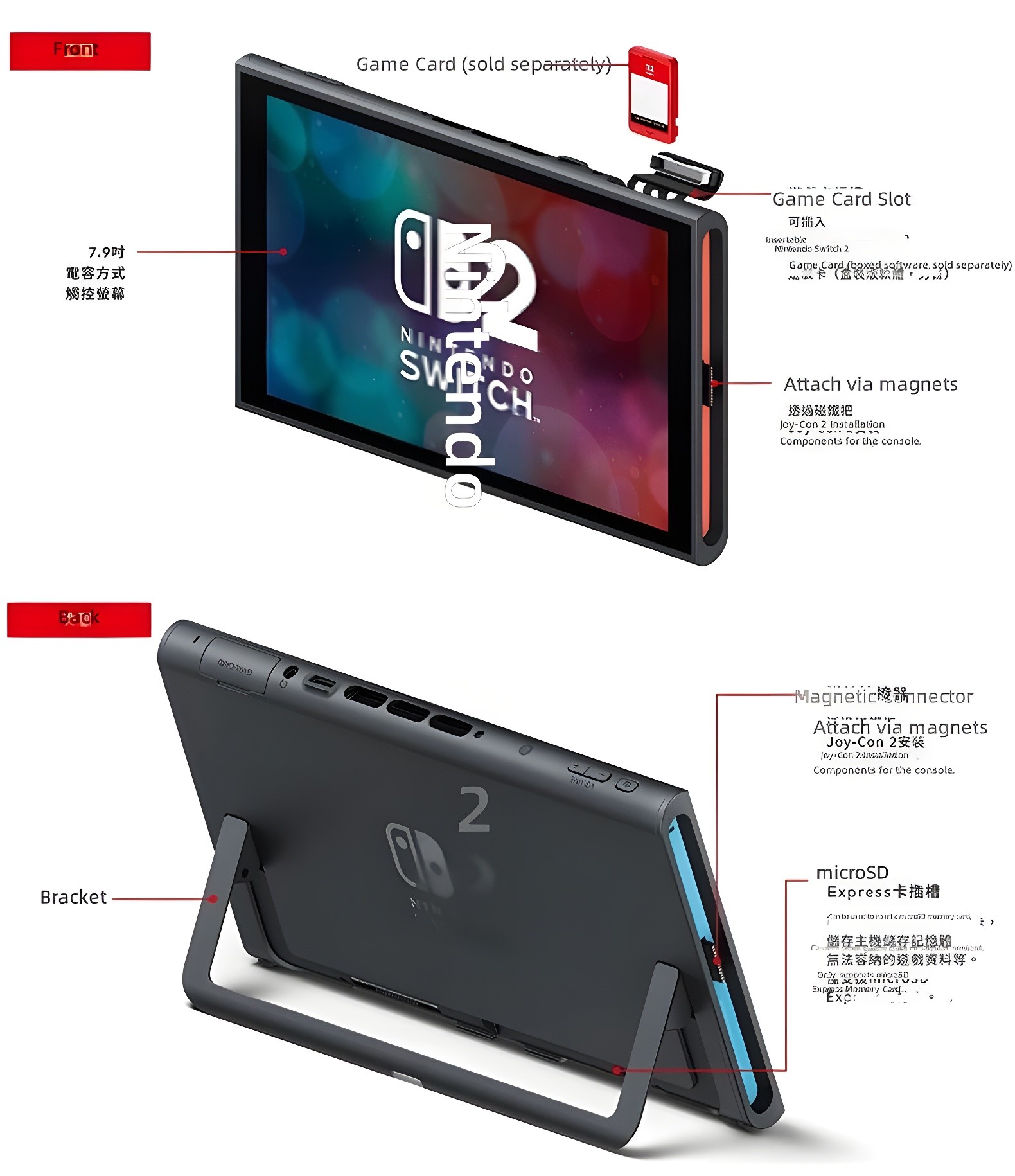
The console houses 12GB of LPDDR5X RAM, operating at 6400 MT/s, ensuring seamless multitasking, rapid asset streaming, and near-instantaneous load times. Coupled with a 256GB UFS 3.1 flash storage solution—expandable via microSD Express card—the system eliminates bottlenecks during open-world exploration, large-scale multiplayer sessions, or fast-paced action sequences. Unlike previous iterations, the Switch 2 features a unified memory pool that dynamically allocates resources between CPU and GPU based on real-time workload demands, maximizing efficiency while minimizing thermal throttling.
Revolutionary Display Technology
The centerpiece of the Switch 2 experience is its newly engineered 7.9-inch OLED display—a significant evolution from the original’s 6.2-inch panel. With a peak brightness of 1080 nits and a contrast ratio exceeding 1,000,000:1, the screen renders deep blacks and vibrant, lifelike colors with unparalleled clarity. The panel utilizes a pixel-perfect RGB subpixel arrangement (not PenTile), eliminating color fringing and ensuring text readability even under direct sunlight. Its 120Hz refresh rate—adaptive across all games and system UI—delivers buttery-smooth motion, reducing perceived latency and enhancing precision in competitive titles.
Crucially, the display incorporates advanced local dimming zones that adjust backlight intensity per scene segment, preserving detail in both shadowed environments and sun-drenched vistas. This technology, previously reserved for high-end televisions, now resides in a palm-sized device, allowing players to witness subtle visual storytelling cues—such as ambient occlusion in dungeons or atmospheric haze in mountain ranges—with unprecedented fidelity.
Enhanced Input Precision and Haptic Intelligence
The Joy-Con controllers have undergone a complete redesign, retaining their modular versatility while introducing next-generation input capabilities. Each Joy-Con now features a dual-stage trigger system (ZL/ZR) with programmable tension profiles, enabling nuanced analog pressure detection for shooting mechanics, vehicle acceleration, or musical instrument simulation. The HD Rumble actuators have been upgraded to support multi-frequency waveform synthesis, allowing developers to convey complex tactile feedback—such as the texture of sand beneath feet, the recoil of a firearm, or the resonance of a stringed instrument—with astonishing realism.
A new capacitive touch surface on the rear of each Joy-Con enables gesture-based controls, including swipe, tap, and pinch inputs—ideal for map navigation, inventory management, or creative tools in sandbox titles. The integrated IMU (Inertial Measurement Unit) boasts 6-axis gyroscopic accuracy within ±0.001°, making motion-controlled gameplay more reliable than ever before. Additionally, the IR camera has been replaced with a time-of-flight depth sensor, unlocking new possibilities for augmented reality integration and precise hand-tracking in future software.
Seamless Ecosystem Integration and Future-Proof Connectivity
Nintendo Switch 2 operates on a unified firmware platform that bridges handheld, tabletop, and TV modes without compromise. The system supports Wi-Fi 6E (802.11ax) with 160MHz channel width and Bluetooth 5.3 LE Audio, ensuring low-latency wireless connectivity for peripherals and headphones. A dedicated USB-C port on the console base supports DisplayPort 1.4 Alt Mode, enabling 4K60 output to compatible displays when docked—though the primary focus remains on delivering uncompromised 1080p60 performance in portable scenarios.
The console introduces a new proprietary “SwitchLink” protocol, facilitating ultra-low-latency peer-to-peer communication between multiple Switch 2 units for local multiplayer without requiring internet infrastructure. This feature empowers spontaneous co-op sessions in classrooms, parks, or travel settings, reinforcing Nintendo’s commitment to social play. Furthermore, backward compatibility extends to all existing Nintendo Switch digital and physical titles, with enhanced performance modes automatically activated for select games—delivering higher frame rates, improved textures, and faster loading—all without developer intervention.
Immersive Software Ecosystem and Creative Empowerment
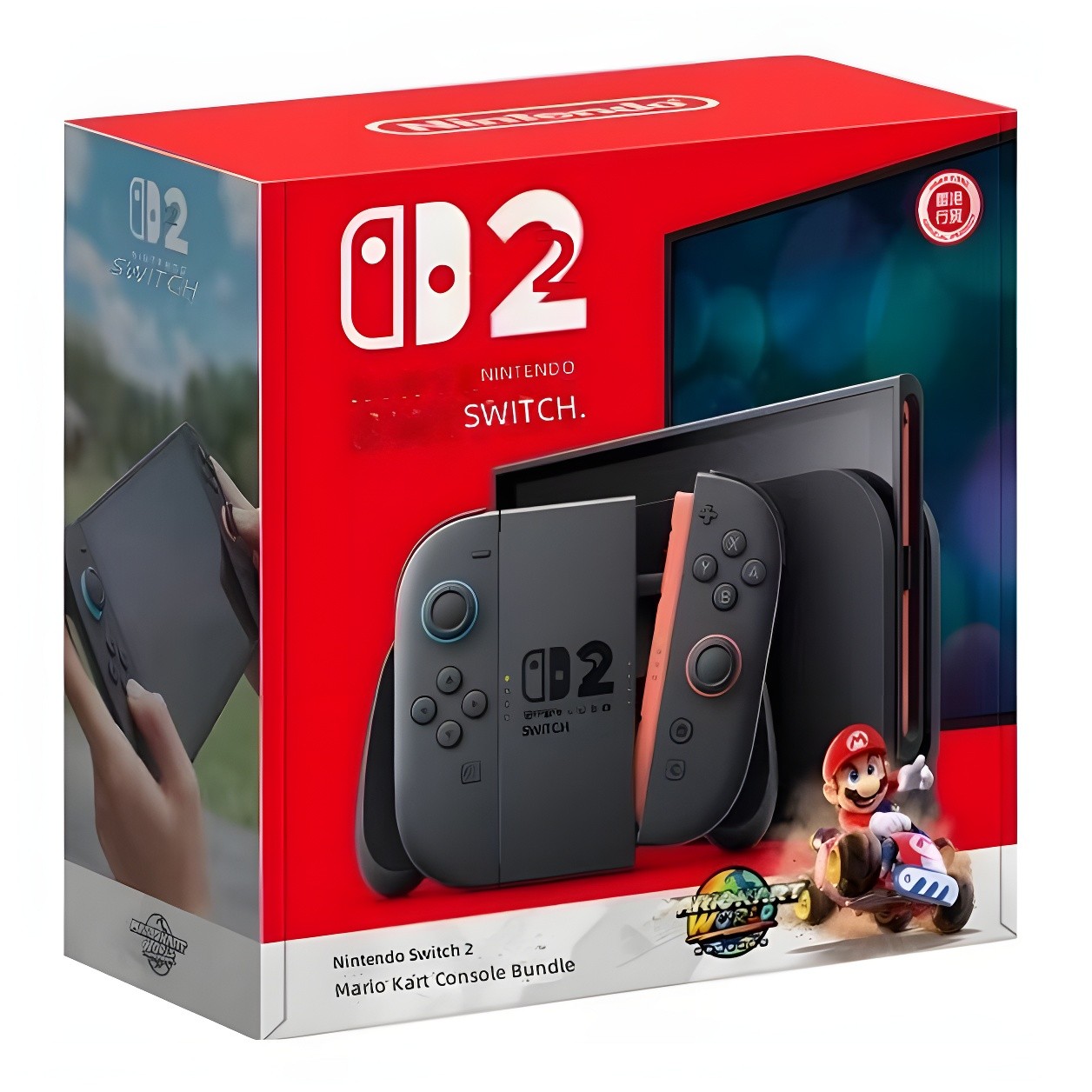
The launch lineup for Nintendo Switch 2 includes Mario Kart World, a genre-defining title that leverages the new hardware to deliver photorealistic track environments, dynamic weather systems, and AI-driven opponents with adaptive racing strategies. Character models feature real-time cloth simulation, subsurface scattering for skin rendering, and procedural animation blending—resulting in fluid, expressive movement that responds organically to player input.
Beyond AAA experiences, the Switch 2 empowers creators through its integrated development suite. The built-in Game Builder Studio allows users to design 3D levels, script logic using visual node-based programming, and export projects directly to the eShop for community sharing. With support for procedural generation, physics-based interactions, and cross-platform publishing (including PC and mobile), this toolset lowers the barrier to entry for aspiring developers while maintaining professional-grade output quality.
The system also introduces Nintendo Create, a multimodal creation environment that merges audio, visual, and interactive design. Users can compose music using virtual instruments with physical modeling synthesis, generate AI-assisted character animations, and assemble interactive narratives—all within a single interface. This democratization of content creation aligns with Nintendo’s long-standing mission: to make gaming accessible, expressive, and deeply personal.

Design Philosophy: Ergonomics, Durability, and Aesthetic Harmony
Every curve, button placement, and material choice on the Nintendo Switch 2 reflects years of user research and iterative prototyping. The chassis is constructed from aerospace-grade magnesium alloy, providing structural rigidity while maintaining a lightweight profile (approximately 398g). The matte-finish anodized aluminum back resists fingerprints and scratches, while the reinforced hinge mechanism supports over 100,000 open-close cycles—ensuring longevity through daily use.
Ergonomic refinements include subtly contoured grip surfaces with micro-textured rubber inserts, reducing hand fatigue during extended play sessions. The analog sticks feature magnetic Hall-effect sensors instead of potentiometers, eliminating drift over time and offering linear, consistent response curves. Button actuation force has been calibrated to 1.8N for optimal tactile feedback—firm enough to prevent accidental presses, yet responsive enough for rapid inputs in rhythm-based or fighting games.
Visually, the Switch 2 adopts a minimalist aesthetic with refined symmetry: the iconic “Nintendo Switch” logo is laser-etched into the front bezel, glowing softly during operation, while the rear panel features a subtle brushed pattern that catches light differently depending on viewing angle—a nod to the brand’s heritage of thoughtful industrial design.
Community-Centric Innovation and Cultural Impact
What truly distinguishes the Nintendo Switch 2 is its role as a social catalyst. In an age of digital isolation, this console fosters presence—whether through local wireless play, synchronized cooperative challenges, or shared creation spaces. Families gather around the TV screen for Animal Crossing: New Horizons+, where generational knowledge is passed down through gardening techniques and island customization. Students collaborate on classroom projects using Switch Lab, simulating scientific experiments or historical reenactments in real time. Artists host live drawing sessions via the integrated stream-capture feature, inviting global audiences to participate in collaborative murals.
The console’s accessibility features are industry-leading: voice-guided navigation, customizable button mapping for motor impairments, colorblind mode with six distinct palettes, and real-time captioning with speaker identification—all integrated at the system level rather than as third-party add-ons. These capabilities ensure that gaming remains a universal language, spoken fluently by players of all abilities.
The Legacy Continues—With Vision
Thirteen years of dedication, countless hours of playtesting, and millions of shared memories have culminated in this moment. The Nintendo Switch 2 does not seek to outperform competitors on raw specs alone; instead, it reimagines what a gaming device can be. It is a companion for quiet evenings, a catalyst for laughter among friends, a tool for learning, and a vessel for artistic expression. Its success lies not in isolated technical achievements, but in how those achievements serve human connection, imagination, and joy.
From the moment the power button illuminates the OLED screen—casting a soft glow across the room—to the final note of a symphony composed in Nintendo Create, the Switch 2 invites you into a world where technology recedes, and experience takes center stage. It honors the past while boldly stepping into the future, carrying forward the spirit of innovation that defined the original Switch, yet standing firmly on its own revolutionary foundation.
This is not just the next console.
This is the next chapter.
And the story begins the moment you press “Start.”
More Supplier Information
For detailed supplier information about this product, please visit:
https://www.ericbuy.com/product/detail/taobao/903119752362/detail.html