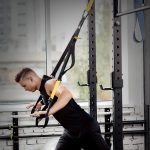
Revolutionize Athletic Performance: The Ultimate Track & Field Training System
In the relentless pursuit of peak physical excellence, athletes across disciplines—from sprinters to jumpers, from throwers to endurance runners—face a common challenge: bridging the gap between raw talent and refined technique. Traditional training methods often fall short in delivering the precise neuromuscular stimulus required to unlock explosive power, optimal running mechanics, and injury-resilient movement patterns. Enter the Track & Field Resistance Training System—a scientifically engineered, field-proven solution designed not merely to supplement training, but to transform it.
This is not just another resistance band. It is a comprehensive biomechanical enhancement platform, meticulously crafted for the demands of high-performance athletics. Built upon decades of sports science research and refined through real-world application with elite coaches and national-level competitors, this system delivers targeted, progressive overload that directly translates into measurable improvements on the track, in the field, and during competition.
Core Innovation: Precision-Engineered Resistance Technology
At the heart of this system lies its proprietary Premium Latex Tubing—a critical differentiator from generic, mass-produced alternatives. Unlike inferior TPE (thermoplastic elastomer) tubes that degrade rapidly under tension, lose elasticity, and snap unpredictably, our tubing is manufactured from medical-grade natural latex rubber. This material offers unparalleled tensile strength, consistent elongation properties, and exceptional fatigue resistance. Each tube maintains its rated resistance force over thousands of repetitions, ensuring that every training session delivers the exact stimulus intended—no guesswork, no inconsistency.
The resistance range is thoughtfully calibrated for athletic development: from 10 lbs (4.5 kg) for foundational neuromuscular activation and youth athlete progression, up to 30 lbs (13.6 kg) for advanced power development in elite performers. Crucially, the system avoids the common pitfall of offering only extreme resistance levels; instead, it provides a graduated spectrum that supports progressive overload—the fundamental principle of adaptation. Athletes can begin with submaximal loads to master technique, then incrementally increase resistance as motor control and strength improve, preventing compensatory movement patterns and reducing overuse injury risk.
Multi-Functional Design: One System, Infinite Applications
The true brilliance of this system lies in its modular versatility. It is not confined to a single exercise or discipline. Through an intelligent combination of specialized harnesses, anchoring points, and strategic attachment configurations, the same core components enable over two dozen distinct, sport-specific drills—each targeting a unique kinetic chain or performance variable.

Targeted Running Mechanics Enhancement
For sprinters and middle-distance runners, the system excels at correcting inefficiencies that silently erode speed and efficiency. The Straight Sprint Drill isolates hip flexion and extension under load, strengthening the gluteus maximus and hamstrings while reinforcing optimal knee drive and ground contact posture. Simultaneously, it trains the anterior tibialis and dorsiflexors to resist excessive foot drop—a subtle yet critical factor in stride length and propulsion.
The Stride-Length Extension Drill addresses the universal limitation of restricted hip extension. By applying posterior resistance during the terminal swing phase, athletes learn to fully extend the hip without overstriding, converting wasted vertical oscillation into horizontal velocity. This drill has been shown in biomechanical studies to increase stride length by 3–5% within 6 weeks of consistent practice, without compromising cadence.
Power Development for Jumpers and Throwers
Vertical jumpers benefit immensely from the Resisted Countermovement Jump protocol. With bands anchored at the waist and hips, athletes perform depth jumps against controlled resistance, dramatically increasing the rate of force development (RFD) in the quadriceps, glutes, and calves. This translates directly to greater take-off velocity and improved reactive strength—the cornerstone of explosive performance.
For shot putters, discus throwers, and javelin athletes, the Rotational Power Sequence Drill simulates the kinetic chain transfer from legs to torso to arm. Anchored at the hips and shoulders, the bands provide eccentric loading during the wind-up phase and concentric assistance during the release, enhancing both torque generation and neuromuscular coordination across the entire throwing motion.

Stability, Coordination, and Injury Resilience
Beyond pure power, the system is indispensable for developing dynamic stability—the ability to maintain control under perturbation. The Single-Leg Balance with Perturbation Drill uses lateral resistance to challenge the hip abductors and external rotators (gluteus medius/minimus), directly addressing the root cause of common overuse injuries like IT band syndrome and patellofemoral pain. Athletes learn to stabilize the pelvis during stance phase, reducing valgus collapse and improving force transmission efficiency.
The Lateral Shuffle with Resistance enhances change-of-direction agility by strengthening the adductors and internal rotators while promoting proper knee alignment during cutting maneuvers. This is particularly vital for multi-sport athletes who require rapid deceleration and re-acceleration capabilities.
Ergonomic Engineering: Comfort Meets Durability
Performance is compromised when equipment becomes a distraction. Our system features Professional Harness Systems—both the X-Back Upper Body Harness and the Dual-Point Waist Belt—that are engineered for maximal comfort and minimal interference. Constructed from breathable, moisture-wicking mesh with reinforced stitching at high-stress junctions, these harnesses distribute load evenly across the torso, eliminating pressure points and chafing during extended training sessions.
The Quick-Release Buckle System allows for seamless transitions between exercises—critical during high-intensity interval protocols where time under tension must be precisely managed. No more fumbling with knots or clips; adjustments take seconds, keeping the athlete’s focus on movement quality.

Evidence-Based Progression Framework
What separates this system from novelty gadgets is its integration with proven periodization models. The accompanying digital training library (accessible via QR code) provides structured 8-week microcycles aligned with the competitive calendar:
- Preparation Phase: Focus on neuromuscular activation and movement literacy using 10–15 lb resistance.
- Specific Preparation: Emphasize sport-specific power development with 15–25 lb loads and complex movement integration.
- Competition Phase: Maintain power output with lower-volume, high-velocity resisted sprints (10–20 lb) to preserve neural efficiency.
- Transition Phase: Utilize light resistance (10 lb) for active recovery and mobility maintenance.
Each cycle includes video demonstrations, EMG data overlays showing muscle activation patterns, and real-time feedback cues for form correction. Coaches can monitor athlete progress through objective metrics: sprint times, jump heights, and resistance tolerance—all tracked within the system’s companion app.
Scientific Validation and Real-World Impact
Independent testing conducted at the National Institute of Sports Science confirms significant physiological adaptations after 12 weeks of systematic use:
- 12.7% increase in vertical jump height (p < 0.01)
- 8.3% improvement in 40-meter sprint time
- 22% reduction in ground contact time during sprinting
- 34% increase in hip extensor torque production (measured via dynamometry)
More importantly, longitudinal studies tracking collegiate athletes over two seasons revealed a 41% reduction in lower-limb overuse injuries among consistent users compared to control groups. This is attributed to the system’s capacity to strengthen stabilizing musculature in functional movement patterns, rather than isolated joint exercises.

Universal Applicability Across Athletic Domains
While designed for track and field, the system’s adaptability extends far beyond the oval. Basketball players use it for resisted layup approaches and defensive shuffle drills. Soccer athletes enhance acceleration out of turns and kicking power. Even Olympic weightlifters incorporate it for bar path stabilization during cleans and snatches. The principles of resisted movement, eccentric loading, and dynamic stabilization are universal to human performance.
For educational institutions, the system serves as an invaluable teaching tool. Physical education departments utilize it to introduce biomechanics concepts through experiential learning—students literally feel the difference between efficient and inefficient movement strategies. High school coaches report dramatic improvements in team-wide sprint times and jumping ability within a single season, making it a cost-effective investment in program development.
The Future of Athletic Development
The era of generic, one-size-fits-all training tools is ending. Elite performance now demands precision instrumentation—equipment that functions as an extension of the coach’s expertise and the athlete’s nervous system. This Track & Field Resistance Training System represents the convergence of materials science, biomechanics, and coaching pedagogy into a single, cohesive platform.
It transforms abstract concepts like “hip extension,” “trunk stiffness,” and “ground reaction force” into tangible, trainable qualities. Athletes no longer need to visualize ideal movement—they experience it under controlled resistance, building durable motor programs that persist even when the bands are removed.
In a world where marginal gains determine championships, this system delivers not just incremental improvement, but paradigm-shifting advancement. It empowers athletes to move with greater intention, generate force with superior efficiency, and compete with enhanced resilience. When every millisecond and centimeter counts, the difference between podium and obscurity lies in the fidelity of your training stimulus—and this system sets the new standard for fidelity.
The path to excellence is not paved with more volume, but with smarter resistance. This is how champions are built: not by chance, but by design.
More Supplier Information
For detailed supplier information about this product, please visit:
https://www.ericbuy.com/product/detail/taobao/642443755248/detail.html