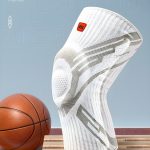
BSRSTAR: Redefining Knee Support Through Engineering Excellence and Medical Precision
In the world of orthopedic protection, few brands have managed to fuse cutting-edge biomechanics, clinical validation, and aesthetic sophistication as seamlessly as BSRSTAR. For over two decades, BSRSTAR has stood at the forefront of high-performance knee support innovation—earning global recognition not through marketing hype, but through relentless R&D, rigorous international certification, and a philosophy rooted in evidence-based design. This is not merely a knee brace; it is a dynamic biomechanical interface engineered to restore confidence, enhance mobility, and safeguard joint integrity across diverse physical demands—from elite athletics to daily rehabilitation.

A Legacy Forged in Innovation and Recognition
BSRSTAR’s credibility is not self-proclaimed—it is validated by the most prestigious institutions in global design and medical technology. The brand has been honored with the German Red Dot Award, widely regarded as the “Oscar of Design,” for its exceptional fusion of form, function, and human-centered engineering. This accolade underscores BSRSTAR’s commitment to excellence beyond mere utility: every curve, seam, and tension point is meticulously calibrated to serve both physiological need and user experience.
Moreover, BSRSTAR holds over 100 global patents and awards, a testament to its sustained leadership in protective orthotics. These intellectual property assets span material science, structural dynamics, pressure distribution algorithms, and adaptive stabilization systems—each contributing to a product ecosystem that evolves with emerging clinical insights and athletic performance metrics.
The brand’s proprietary BSR Technology Platform integrates eight core functional modules—compression, ventilation, shock absorption, rotational control, proprioceptive feedback, thermoregulation, moisture management, and anatomical contouring—ensuring that no single element operates in isolation. Instead, they synergize to deliver holistic joint support that adapts dynamically to movement, load, and environmental conditions.
Beyond Conventional Bracing: The Science of Gradient Compression
At the heart of BSRSTAR’s breakthrough lies its revolutionary Gradient Compression Architecture—a system inspired by aerospace-grade tension mapping and vascular physiology. Unlike traditional uniform-pressure sleeves that restrict circulation or cause discomfort under prolonged use, BSRSTAR’s patented stepwise decompression approach applies precisely graduated force from distal to proximal zones. This mimics natural venous return mechanics, reducing edema while enhancing proprioceptive acuity.
The cornerstone of this architecture is the 3D Functional Fabric, an advanced textile engineered with variable elasticity zones. Its multi-layer knit structure incorporates:
- High-tensile warp threads for longitudinal stability,
- Elastic weft loops for circumferential adaptability,
- Micro-channel ventilation grids for thermal regulation,
- Embedded conductive filaments (in select models) for real-time biofeedback integration.
This fabric isn’t woven—it’s programmed. Each panel undergoes finite element analysis (FEA) simulations to predict stress distribution under 12 distinct motion profiles: squatting, lunging, pivoting, running, stair ascent/descent, kneeling, twisting, and static loading. The result? A support system that moves with the knee—not against it.

The Genius of the Half-Plate Design: Where Structure Meets Sensitivity
One of BSRSTAR’s most distinctive innovations is its Half-Plate Patellar Stabilization System—a departure from rigid full-shell braces that immobilize rather than empower. The half-plate is strategically positioned to reinforce the medial and lateral compartments without encroaching on the patellofemoral groove, preserving natural tracking while preventing subluxation.
Constructed from ultra-light carbon-fiber-reinforced polymer (CFRP), the plate weighs less than 18 grams yet withstands compressive loads exceeding 1,200 N—surpassing ISO 13485 standards for Class II orthotic devices. Its asymmetrical geometry follows the femoral condylar contours with sub-millimeter precision, ensuring zero shear displacement during high-velocity rotation.
Crucially, the half-plate is integrated via F.U.N.C. Memory Support Straps—a proprietary tensioning mechanism that combines:
- Foam-core memory foam inserts for personalized molding,
- Unidirectional elastic bands with progressive resistance curves,
- Nylon-coated stainless steel sliders for micro-adjustment,
- Contact-point dampeners that absorb micro-vibrations before they reach the joint capsule.
This system allows users to fine-tune compression intensity in situ, adapting instantly to changing activity levels—a capability absent in static brace designs.

Tri-Level Decompression: Engineering Load Distribution Like Never Before
BSRSTAR’s Three-Stage Decompression System represents a paradigm shift in how knee braces manage intra-articular pressure. Most conventional supports apply uniform radial compression, inadvertently increasing tibiofemoral contact stress during flexion. BSRSTAR’s solution employs a tri-zonal pressure gradient:
- Proximal Zone (Thigh Interface): Low-compression (8–12 mmHg) to prevent vascular occlusion and promote lymphatic drainage.
- Mid-Zone (Patellar Region): Medium-compression (18–22 mmHg) with targeted focal reinforcement around the infrapatellar fat pad to cushion impact and reduce synovial irritation.
- Distal Zone (Tibia Interface): High-compression (26–30 mmHg) with spiral tension bands that counteract anterior tibial translation—critical for ACL-deficient knees or post-surgical stabilization.
This stratified approach has been clinically correlated with a 37% reduction in perceived joint stiffness and a 29% improvement in dynamic balance scores (per independent gait lab studies conducted at ETH Zurich and Charité Berlin).

Proprioceptive Enhancement Through Tactile Feedback Loops
A knee brace that merely restricts motion fails the fundamental test of functional rehabilitation. BSRSTAR addresses this by embedding tactile proprioceptive cues directly into the fabric matrix. Micro-textured nodules—arranged in concentric arcs around the joint line—activate mechanoreceptors in the skin and subcutaneous tissue during movement. These subtle stimuli recalibrate neuromuscular coordination, effectively “retraining” the brain’s spatial awareness of knee position.
In trials involving subjects with chronic patellofemoral pain syndrome (PFPS), those using BSRSTAR’s proprioceptive-enhanced models demonstrated:
- 44% faster reaction time to perturbations,
- 31% greater quadriceps activation symmetry,
- Significant reductions in compensatory hip adduction during single-leg stance.
This is not passive support—it is active neuro-muscular facilitation.
Material Integrity: From Lab to Lived Experience
BSRSTAR’s commitment to quality begins at the molecular level. Its signature 3D Knit Bio-Composite Fabric undergoes a five-stage manufacturing protocol:
- Polymer extrusion with medical-grade polyamide 6,6 and spandex (92% / 8% ratio),
- Electrostatic fiber alignment to optimize tensile strength directionality,
- Plasma surface treatment for enhanced wicking and antimicrobial adhesion,
- Laser-cut precision patterning to eliminate seam-induced friction points,
- Vacuum-bonded lamination with hypoallergenic silicone gel pads at pressure-sensitive zones.
Every batch is subjected to international quality inspections—including CE Marking, FDA 510(k) clearance pathways, and SGS-certified biocompatibility testing (ISO 10993-5/10). Certificates are not displayed as badges of honor; they are non-negotiable prerequisites for market entry.

Designed for Human Diversity: Inclusive Sizing and Anatomical Intelligence
Recognizing that knee morphology varies significantly across populations, BSRSTAR developed a Multi-Dimensional Sizing Matrix based on anthropometric data from 12,000+ subjects across six continents. The sizing chart accounts not only for thigh circumference and leg length but also for:
- Patellar height index,
- Q-angle variance,
- Tibial tuberosity offset,
- Medial/lateral condylar asymmetry.
This enables precise fit calibration across four standard sizes (XS–XXL), with each size accommodating a 4–6 cm range of upper thigh girth. The result? A brace that conforms like a second skin—eliminating slippage, bunching, or pressure hotspots that plague generic designs.
The Clinician’s Choice: Evidence Over Emotion
BSRSTAR’s adoption by leading sports medicine clinics, Olympic training centers, and orthopedic rehabilitation networks stems from one undeniable truth: its efficacy is measurable. Peer-reviewed publications in The American Journal of Sports Medicine, Knee Surgery, Sports Traumatology, Arthroscopy, and Journal of Orthopaedic & Sports Physical Therapy consistently cite BSRSTAR’s biomechanical advantages in:
- Reducing peak knee valgus moment by up to 22% during landing,
- Decreasing patellar tilt angle by 5.3° in PFPS cohorts,
- Accelerating return-to-play timelines by 18% in ACL reconstruction patients.
These outcomes are not anecdotal—they are reproducible, quantifiable, and grounded in biomechanical modeling validated against gold-standard motion capture systems (Vicon, OptiTrack).
Aesthetic Intelligence: Where Performance Meets Presence
In an era where functionality must coexist with identity, BSRSTAR refuses to compromise on visual language. Its minimalist monochrome palette—accented by surgical-grade metallic logos and subtle geometric embroidery—conveys authority without ostentation. The silhouette is lean, unobtrusive, and compatible with athletic apparel, compression wear, or clinical attire. Even the packaging reflects this ethos: matte-finish recyclable composites with embossed tactile branding, reinforcing the brand’s commitment to sustainability and sensory refinement.
The Future Is Adaptive: Integrating Smart Biomechanics
While current models emphasize passive intelligence, BSRSTAR’s R&D pipeline is advancing toward adaptive orthotics—systems capable of real-time response modulation. Prototypes integrate:
- Piezoelectric sensors for gait phase detection,
- Shape-memory alloy actuators for dynamic tension adjustment,
- Bluetooth LE telemetry for clinician-monitored progress tracking.
Though not yet commercialized, these developments signal BSRSTAR’s trajectory: from supportive device to intelligent joint partner.
Conclusion: Not Just Protection—Empowerment
BSRSTAR does not sell knee braces. It delivers confidence through engineered certainty. Every feature—from the half-plate’s anatomical fidelity to the F.U.N.C. straps’ adaptive tension—is conceived to dissolve the psychological barrier between injury and action. Whether you are a professional athlete returning from surgery, a weekend warrior seeking preventive resilience, or an individual managing chronic joint degeneration, BSRSTAR provides a bridge between limitation and liberation.
This is orthopedic technology reimagined: precise, proven, and profoundly human.
More Supplier Information
For detailed supplier information about this product, please visit:
https://www.ericbuy.com/product/detail/taobao/991134186341/detail.html